The mortgage interest rate has risen, and the sales volume of the US housing market in August reached a 14-month low
The combination of soaring mortgage interest rates, geopolitical and debt-related factors led to a sharp decline in the sales volume of existing houses in the U.S. in August.
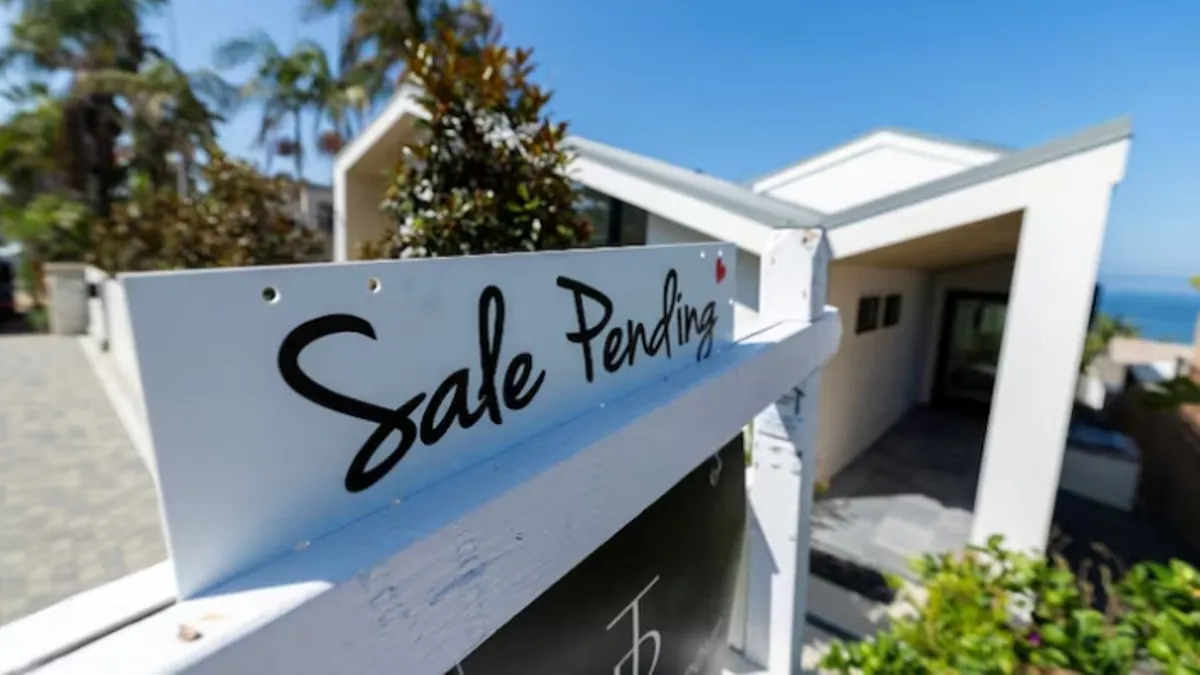
The housing market sales have plummeted, but it is in line with market expectations.
The latest housing market data shows that the existing home sales in the United States cooled down in August. After seasonal adjustment, the sales volume of that month was 3.98 million units, down 2% from the same period of last year, setting the lowest record since June 2025. This final data is largely consistent with market predictions. Previously, economists from several institutions predicted that the existing home sales in August would likely fall to around 3.98 million units, and the final data is completely in line with market expectations, without any unexpected fluctuations.
The statistics of existing home sales are based on the contract signing time. The transaction data released in August mostly correspond to the housing transactions that were finalized in June and July. The actual cooling extent of the housing market is likely to be greater than the reported data. The overall housing sales in the first eight months of this year decreased by 1.2% year-on-year, and the cooling trend in the housing market is very clear.
The soaring mortgage interest rates have become the biggest factor suppressing the real estate market.
The skyrocketing mortgage interest rates are the main reason for the cooling of the current real estate market. Monitoring data shows that by the end of July, the 30-year fixed mortgage rate in the United States had reached 6.66%, and the latest reading has risen to 6.71%, reaching the highest level in more than a year. The rate soared in just a few months. Since the U.S. started military actions against Iran in late February this year, the 30-year home loan rate has gone up by over 70 basis points.
The trend of mortgage interest rates follows the trend of long-term U.S. Treasury yields. Currently, the conflicts in the Middle East are recurring, raising concerns about global inflation. The direction of the Federal Reserve's monetary policy is uncertain and market expectations are unstable. The expansion of the U.S. government's debt scale, combined with multiple negative factors, has raised the financing costs in the market. The increase in mortgage interest rates has exacerbated the monthly payment pressure on home buyers. Those who once had the capacity to buy a home may delay or scrap their plans.
House prices are firm and the number of homes for sale is up.
In the U.S. house prices have not weakened and are continuing to move up steadily despite a drop in sales and a rise in inventories. The median price of existing home sales in August reached $429,100, increasing slightly by 1.6% compared to the previous year. Although the demand for property purchases has cooled down, the overall market supply and demand is not out of balance. Coupled with the supporting force of the previous high housing market temperatures, there is little likelihood of a sharp drop in housing prices.
At the same time, the proportion of first-time home buyers has increased. The proportion of first-time buyers who completed transactions in August reached 30%, up from 29% in July and 28% in the same period last year. However, the industry generally believes that in order to maintain the long-term stable operation of the real estate market, the proportion of first-time buyers needs to remain stable at around 40%. Now, there is still a gap in the proportion of first-time buyers.
Under the high-interest rate environment, the speed of property listing and transaction has slowed down. The median number of days for property listings to be sold in August was 31 days, an increase from 29 days in July. More buyers are choosing to hold off on purchases. The real estate market does not face risks of massive sell-offs or defaults. In August, forced property sales such as foreclosures and cut-price fire sales stayed steady at 2%, and this rate was not rising.