Wrong choice of technical route, ULA gradually fell into a passive position
Under the pressure of financial strain, Boeing and Lockheed Martin, the two major shareholders, are considering selling this veteran launch company.
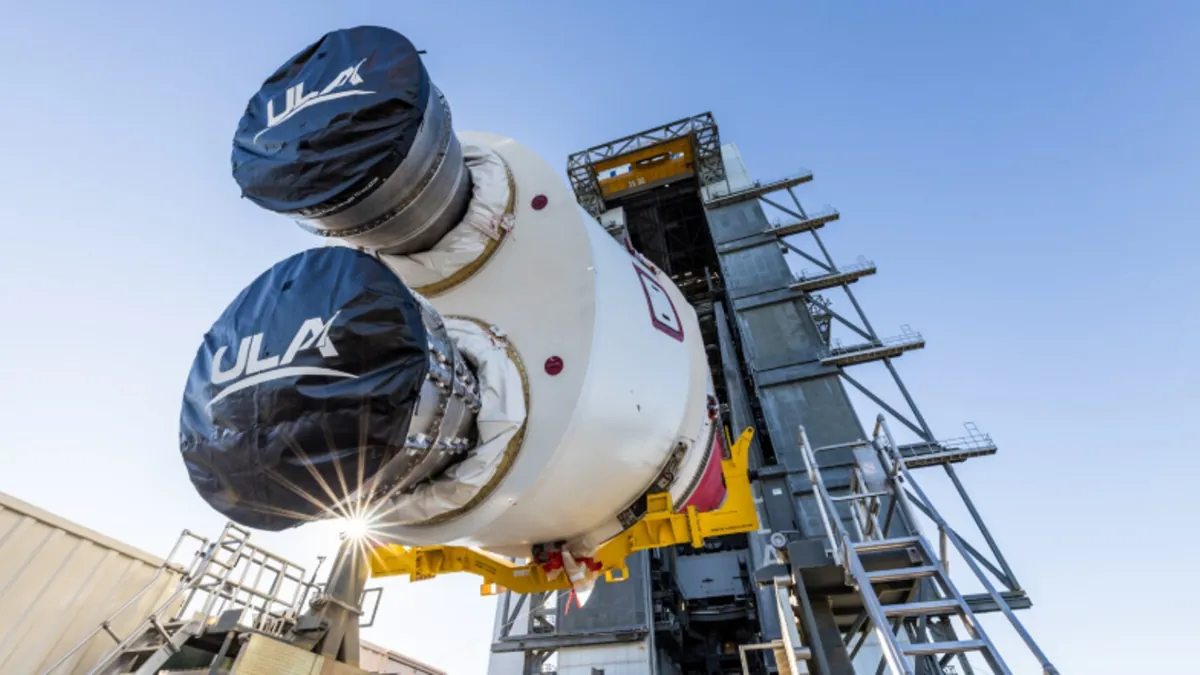
The development of the US space industry sector.
Most US commercial space companies follow two development paths. One is that the rocket boosters can be recovered and reused, thereby reducing the cost of a single launch. The other is diversification of business, not solely relying on launch services for income. SpaceX is a typical example. SpaceX started by developing reusable Falcon 9 boosters. After the launch business became stable, it did not only rely on selling launch slots for income. The team successively developed cargo spacecraft, manned spacecraft, and self-developed satellite hardware to build the Starlink broadband network. Later, it also explored new projects such as orbital data centers and space manufacturing.
The launch business only accounts for a very small part of SpaceX's revenue. Starlink is the core sector driving its valuation. SpaceX's revenue in the first half of the year was $12.5 billion. The launch service accounted for only 8%. A large portion of the income came from Starlink. Blue Origin also does more than just rockets. Beyond the New Glenn rocket project, it began manufacturing satellites and plans to launch a broadband satellite network, directly competing with Starlink. Firefly Aerospace, which originally only did launches, has now shifted its focus to lunar landers.
ULA has grown through government contracts.
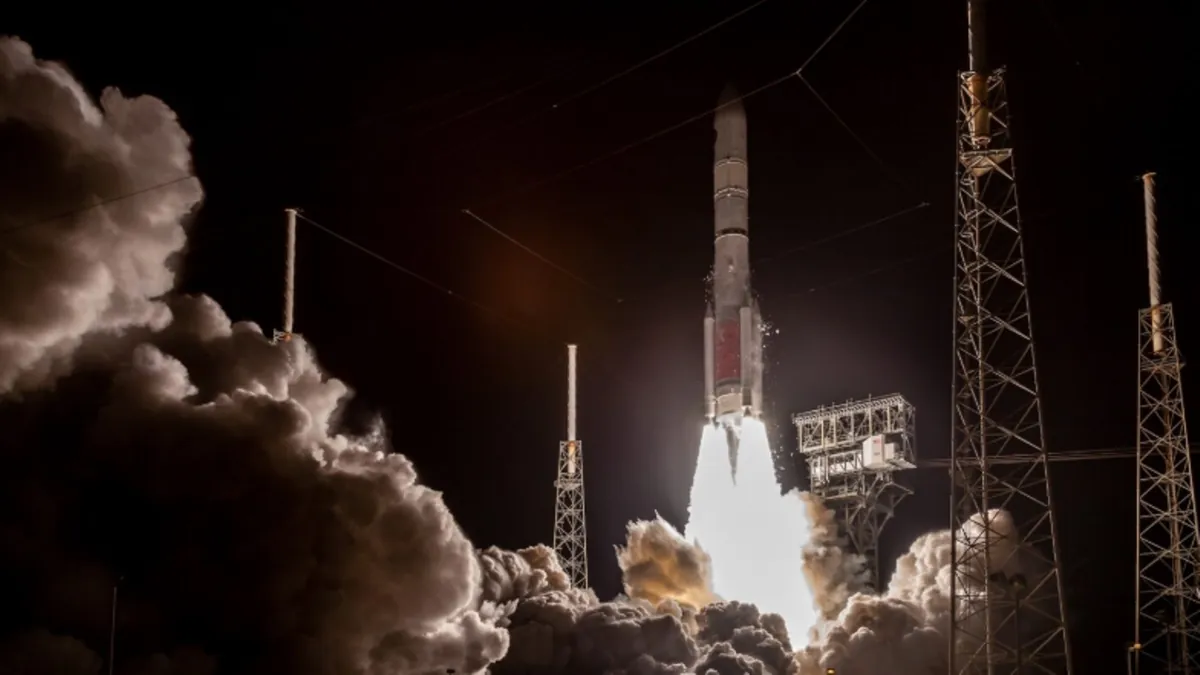
ULA was established in 2006, with Boeing and Lockheed Martin each holding a 50% stake. It was a government-led joint venture. At that time, commercial launch demand was shrinking, and many orders went to European and Russian launch providers. The Boeing Delta rocket project suffered severe losses, and the US government needed to retain two independent rocket systems to ensure national security payload launches. The two giants merged the Delta and Atlas rocket projects, and the competition for launch markets in the US basically disappeared.
In the first ten years of its establishment, ULA made stable profits through government launch contracts, generating billions of dollars in revenue for the two parent companies each year. However, during this period, ULA's technical approach was completely different from the commercial aerospace companies that emerged later. In 2014, SpaceX sued the US Air Force to gain the qualification for military launch bids. The following year, the Pentagon lifted restrictions, and SpaceX was given the bidding opportunity. Shortly after the Falcon 9 booster successfully recovered in 2016, SpaceX won its first high-priority military launch contract. This was the turning point in ULA's development.
In response to the impact of SpaceX, ULA initiated the development of the Vulcan rocket to replace the old ones. However, from the very beginning of the design, reusability was not the primary goal of the Vulcan. It did not plan to recover the first stage boosters, only having a preliminary idea of recovering the main engines in the future. The Vulcan engine, before finalizing the plan, engineers prepared two different designs for the first stage, one with methane fuel and one with a narrow-body liquid fuel scheme. The test certification of the BE-4 engine was postponed, and in addition, the upper stage of the Centaur rocket exploded during a ground test in 2023. The Vulcan was delayed until early 2024.
The Vulcan rocket has experienced consecutive hardware failures.
The first flight of the Vulcan was successful, verifying the basic flight capabilities. However, the second test flight revealed hardware defects. The solid boosters produced by Northrop Grumman had their nozzles rupture shortly after takeoff. The rocket still completed its orbit insertion. Post-incident investigation confirmed that the insulation material of the boosters had manufacturing defects, and the high temperature burned through the nozzles. In February 2025, during the fourth launch, a similar fault occurred again, and the Vulcan rocket was directly grounded for more than half a year.
ULA plans to resume launches as soon as possible, with the goal of carrying the Amazon Leo broadband satellite. However, the US Space Force has not approved it to take over the military payload launch tasks. The military transferred some of the tasks originally assigned to ULA to SpaceX. The cost shortfalls caused by the technical solutions continued to expand. The Vulcan is a fully expendable rocket, and the hardware is discarded after one launch. The Falcon rocket of SpaceX extensively reuses the first-stage boosters, and the hardware costs are continuously reduced. The launch quotations of ULA continued to rise, with some task quotations exceeding $200 million, while SpaceX's launch prices have remained stable for a long time.
Technology hinders operations and puts pressure on the parent company's funds.
Lockheed's financial report can clearly reflect the changes. In 2016, the profit from ULA was $436 million, but it shrank to $109 million in 2022. By 2025, the profit that Lockheed received from ULA would be almost negligible. Ten years ago, ULA contributed a quarter of Lockheed's operating profit for its space business. In the past five years, this proportion has dropped to less than 10%. Boeing's financial report does not separately disclose ULA's revenue. The relevant data is combined with that of other joint ventures for statistics. But the overall revenue picture also has worsened.
Taking inflation into account, the book value of Boeing and Lockheed's shareholders in ULA is only half of what it was a decade ago. The two companies publicly announced their funding guaranty arrangements in July 2026. SEC documents show the Vulcan suspension has been a negative factor on ULA's operations and finances. ULA initially projected 18 to 22 launches in 2026. Eight months into 2026, only five launches have been completed and only one with the Vulcan rocket.