Oil prices soar, high interest rate pressure, European stock market drops to three-month low
European equities have retreated in unison to hit a new three-month low as expectations for inflation and interest rate hikes grow. Financial and luxury goods sectors have weakened, while energy stocks have performed strongly against the trend.
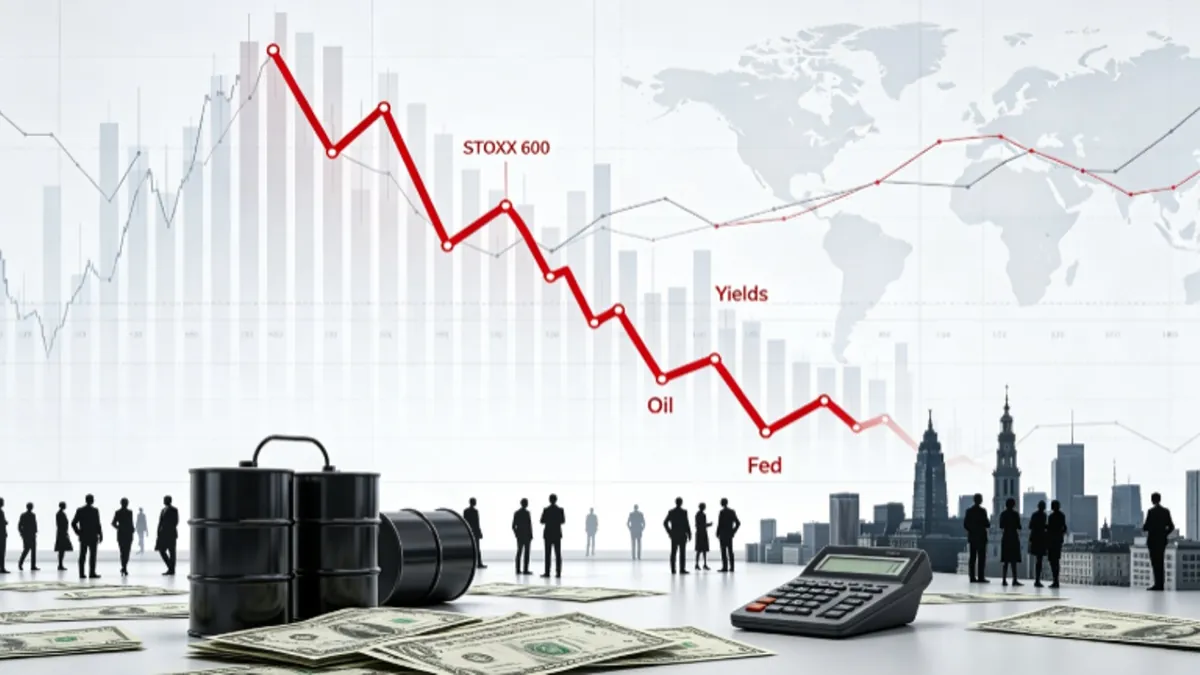
The European stock market hits new low for the period.
The pan-European Stoxx 600 opened slightly lower on September 15 and closed at 634.18 points, its lowest since June 12 this year. Global oil prices jumped over 2% in one day. Tensions between countries made investors worry there may not be enough energy supply. This lifted expectations that global inflation will go up.
At the same time, bond yields in Europe and the United States continued to rise, with the yield on the 10-year US Treasury exceeding 5%, reaching a new high in the past 20 years. The benchmark yield in the eurozone also climbed to a 17-year high. Investors are generally worried that high inflation will cause major central banks to continue tightening monetary policies, and the long-term high-interest-rate environment will suppress corporate profits. As a result, funds have been withdrawing from the stock market in large numbers, causing the overall decline of European stocks.
The financial sector led the decline.
The European Banking Index and the Financial Services Index both closed lower, with declines of 0.9% and 1.9% respectively. UBS had the most significant drop, falling by 3.4% on the day. The sector's weakness is not a short-term fluctuation in sentiment, but rather there are clear negative factors related to performance. Bank executives in the United States issued an early warning, stating that the investment banking revenue in the third quarter is likely to decline by at least 10%, and the trading business revenue will remain basically unchanged. This performance warning has raised concerns about the global banking industry's profit.
Market investors have lowered their expectations for the earnings of the banking sector and re-evaluated the industry's valuation system. Analysts said that the market has formed a consensus expectation that the banking industry is unlikely to maintain its previous stable profit growth rate. The pressure from the decline of performance will continue, and there is still space for the sector valuation to fall. The high interest rate environment was good for banks at first, but the rise of yields has made the market start worrying about the rise of credit bad debt risks. Multiple negative factors have led the European financial sector to weaken.
L'Oreal is now the company with the biggest market value among companies listed in France.
Europe's luxury goods index dropped 1.5% in one day. Top luxury brand LVMH's share price fell sharply, down 2.6%. But beauty giant L'Oreal's stock stayed steady. It overtook LVMH to become France's most valuable public company. This is the first time since 2017 that a company outside the luxury sector has taken the top spot. For a long time, investors were hopeful about high-end luxury brands. Now consumer demand is weak. Investors are pulling money out of luxury stocks and moving it to the more stable beauty business.
Energy stocks strengthened, with the market closely watching the Fed's interest rate decision.
Under the general decline of the market, the European stock market sectors were extremely differentiated. The majority of industry sectors followed the decline of the overall market, while only the energy sector rose against the trend, with a single-day increase of 1.3%, becoming the only rising sector in the entire market. The attack on energy infrastructure in the Gulf region, coupled with the geopolitical tensions between Russia and Ukraine, increased the uncertainty in the global supply side of crude oil, pushing oil prices higher. The rise in oil prices benefited European energy companies, driving the sector to rise against the trend. The rise of energy stocks, to a certain extent, offset the declines in the financial and luxury sectors.
The market is in a wait-and-see mode with caution and the key is the decision of the Federal Reserve on interest rates. Market data shows that the probability of raising interest rates by the Fed this time is more than 90%, which has almost become the consensus of the market. Before this, the European Central Bank had completed its second interest rate hike of the year, and regional monetary policies have continued to tighten. If the Fed raises interest rates as scheduled this time, the global high-interest-rate environment will be further consolidated, which will continue to suppress stock market valuations, and European stocks are unlikely to have a reversal trend in the short term.
In addition to the fluctuations in the macro market, Spanish beauty company Puig announced a 1.2 billion euro full acquisition of the skincare brand ISDIN. After this large-scale merger and acquisition was implemented, the company's stock price did not rise but fell instead, with a 2.2% one-day decline. The market is concerned that large-scale acquisitions will occupy enterprises with a large amount of cash flow and will temporarily drag down the company's financial situation.