The stock markets of several Gulf countries showed significant divergence on Monday
People are more worried about energy and shipping safety due to geopolitical conflicts. Therefore, the main stock indexes in the Gulf region had different trends. Different industries and individual stocks also rose and fell separately.
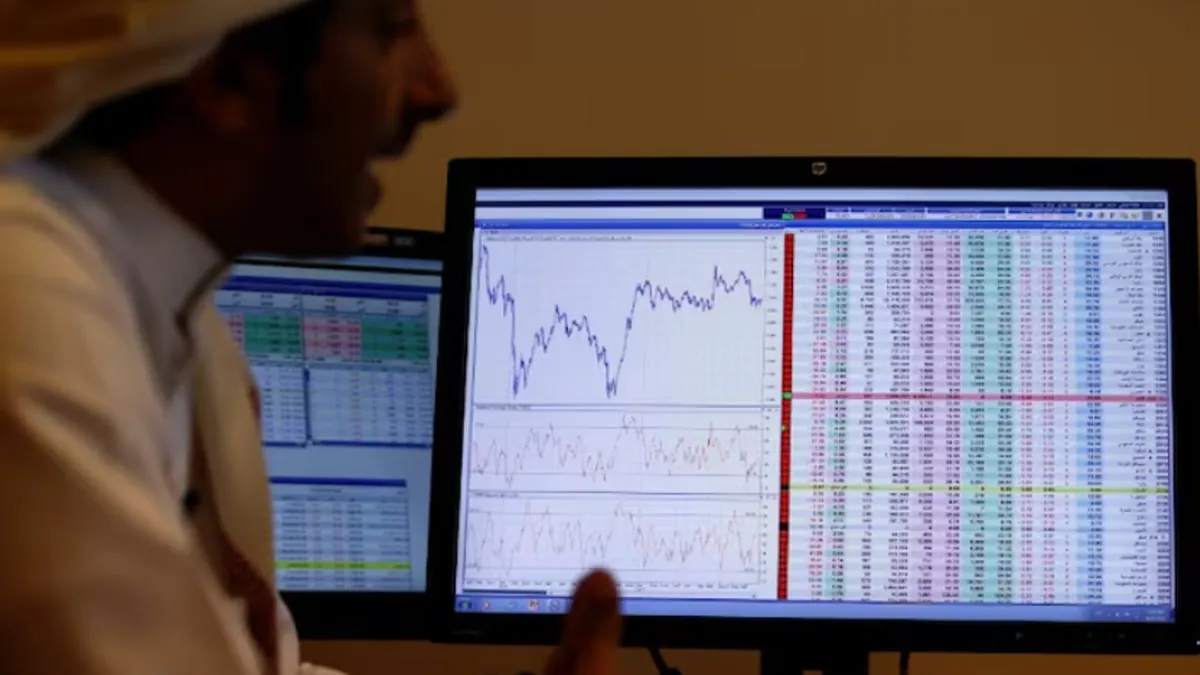
The Saudi stock market opened lower, sectors mixed.
On September 14, Saudi Arabia's benchmark stock index TASI had a bottoming out and recovery trend. The index fell at the beginning of the morning session and ended with a slight increase of 0.1%. The banking and oil services sector advanced, while the energy giants, chemicals and mining sectors softened. Al Rajhi Bank became a supporting force in the index, with its share price rising by 1.8%. Arabian Drilling received a long-term natural gas drilling order worth $532.5 million, which stimulated the stock price to rise by 3% at the close.
The heavyweight stocks of the market performed relatively weakly. Saudi Aramco declined slightly by 0.2%. The mining companies Saudi Basic Industries Corp and Saudi Arabian Mining Company experienced larger pullbacks, with declines of 1.9% and 1.5% respectively. The business of these companies is highly tied to commodity prices, and the uncertainty brought by geopolitical risks dampened the willingness of investors to go long.
Riyadh Cement was the worst-performing stock of the day, with a single-day drop of 4.9%. This decline was caused by the stock price adjustment due to dividend payouts. After the dividend payout, the stock price is correspondingly reduced by the dividend amount, which often leads to a short-term rapid decline. Many ordinary investors regard it as a bearish market signal. The fluctuation in market sentiment stems from the news of infrastructure attacks. Drone attacks caused a short-term suspension of the oil pipelines from east to west in Saudi Arabia. Based on the current export volume, the inventory at Yanbu Port is only sufficient to sustain five to seven days of exports. The tight inventory reserves have exacerbated market concerns.
The safety of maritime shipping affects the nerves of the regional market.
Multiple attacks in the region have occurred one after another, putting pressure on the Gulf market. The shipping risks in the Strait of Hormuz and Bab el-Mandeb strait have increased. Some ships have been shelled and caught fire within the region. At the same time, the Iranian Foreign Ministry stated externally that Saudi Arabia has submitted an application, hoping to postpone the Iran-Gulf country talks originally scheduled to be held in Oman. The postponement of the talks indicates a slowdown in the pace of regional diplomatic negotiations, and the market will naturally assume that the short-term situation is unlikely to be resolved quickly.
Stock indices in Qatar, Dubai and Abu Dhabi are diverging.
The stock markets of other Gulf countries are performing differently. The benchmark index of Qatar - QSI, closed down by 0.3%. Market risk aversion sentiment has suppressed local assets. The Dubai stock index - DFMGI, rose by 0.5%. The leading real estate company, Emaar Properties, became the core driver of the market, with a single-day increase of 6.4%. Abu Dhabi's index rose slightly by 0.1%, and Space42 pulled the index up, with the stock rising by 6.5%. The Egyptian market is not within the Gulf region, but it has a strong linkage with the Middle East region. The Egyptian EGX30 blue-chip index fell by 1.6%.
Geopolitical events affect stocks in the Gulf region.
The stock pricing in the Gulf market is different from that in ordinary mature markets. Geopolitical news often has a greater impact on short-term market trends than corporate financial reports. Many large-cap stocks belong to industries with heavy assets, such as energy, infrastructure and real estate, and their assets are concentrated in the Middle East region. Once security risks rise, funds will quickly re-evaluate the risk premium of assets.
The same news has completely different effects on different sectors. For example, when energy service companies receive new engineering contracts and their orders are confirmed, their stock prices will rise. However, oil and chemical giants have to face the potential risk of facility attacks and also need to predict oil price fluctuations. Therefore, their capital operations will be more cautious. The stock market of the real estate sector is driven more by the company's capital policies.