Geopolitical Location-Based Pricing: Crude Oil Futures Experience a Structural Price Spread Boom
The shipping and pipeline bottlenecks in the Middle East have reshaped the logic of crude oil pricing. Restricted shipping routes result in deep discounts for crude oil, while smooth circulation of oil products leads to an increase in premiums. Geopolitical price differences have become the core of trading.
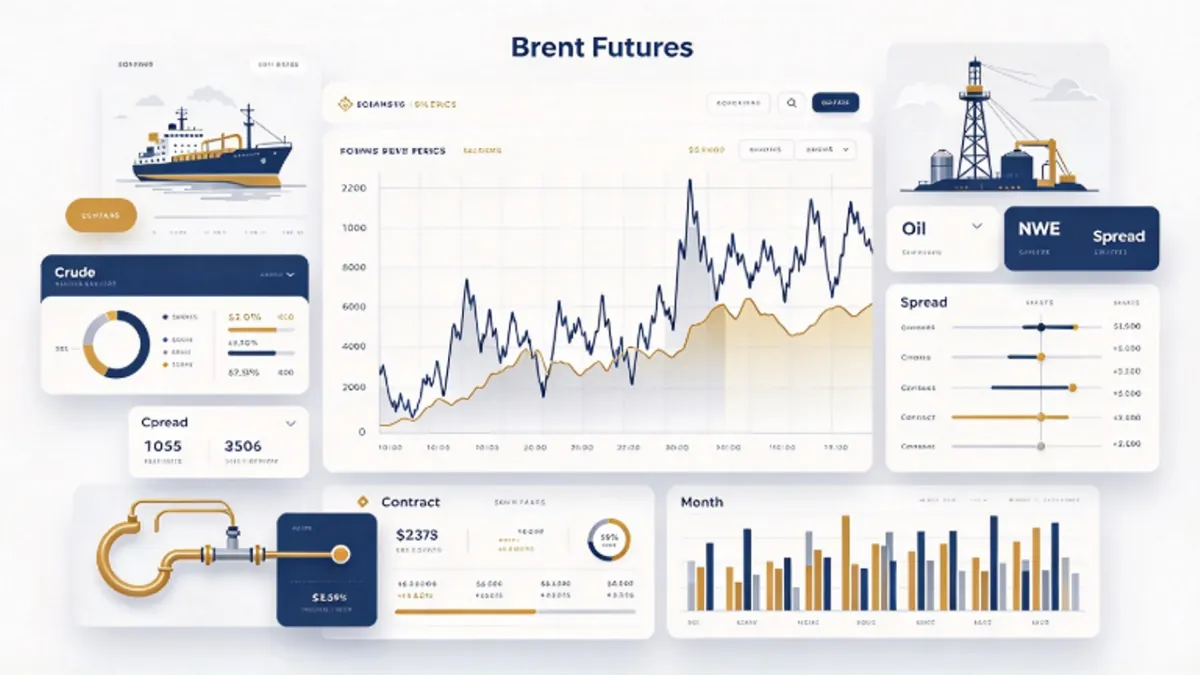
Brent crude had a significant surge initially.
Right now, the swings in crude oil futures are less about supply and demand or inventory levels and more about geography and transportation routes. The escalation of Middle East conflicts interrupted global crude oil flows, prompting a strong uptrend in Brent crude. The Houthi forces' control of Bab el-Mandeb and Saudi Arabia's shutdown of the Red Sea oil pipeline restricted two key transportation nodes, causing the risk of crude oil circulation in the market to soar rapidly.
Data shows that the Brent futures price rose from $70.14 in early July to a peak of $109.97 in early September, with a nearly 57% increase in just over two months. Compared to the low point after the conflict broke out in February this year, this round of increase was extremely rare. The Brent futures delivery supply mainly flows to the European and American markets, avoiding the high-risk shipping routes in the Middle East throughout the process, and the circulation stability is extremely strong.
In the context of global crude oil circulation being disrupted, such oil products without transportation risks naturally enjoy high geopolitical premiums. The Middle East crude oil, which is highly dependent on the transportation through the Strait of Hormuz, is in the opposite situation. Under the dual pressures of channel risks and restricted passage, the export difficulty of these oil products has significantly increased, and they can only be sold at a substantial discount. The futures and spot prices are trapped in a backwardation situation.
High-risk shipping lanes for oil have seen significant price discounts.
The Strait of Hormuz is the core shipping route for Middle Eastern crude oil to reach the sea. It has now become the biggest risk bottleneck in the global oil market. Now, the daily volume of crude oil passing through the strait is only around 10 million barrels, which is half of the level before the conflict. The efficiency of passage has been largely halved. Iraqi Basra medium-quality crude oil, UAE Murban crude oil and Qatar Al-Shaheen crude oil all rely heavily on the transportation through the Strait of Hormuz for export. Their prices have been suppressed. Among them, Qatar Al-Shaheen crude oil has the most significant discount, with a price of only $24.92.
When traders and refining enterprises engage in transactions, they will actively deduct risk premiums, resulting in a relatively weak contract price. Even though the global overall oil market is tight, high-risk shipping lane oil products are difficult to follow the general market trend and rise, and the structural weakness pattern is difficult to reverse. Most funds are mainly engaged in shorting the spread, further lowering the contract valuation.
Ocean shipping lanes far from geopolitical conflicts, with safe transportation channels, have seen premium prices rise in the current market environment. The Australian Pirines crude oil is the strongest target in this round of the market. Before the conflict broke out, the price of this oil product was lower than Brent futures. On September 11, its quote soared to $138.04, which was $33.43 higher than the Brent closing price on that day. Since the escalation of the conflict in February, the price has risen by as much as 96%, almost twice the increase of Brent.
The cross-market spread has widened.
The greatest trading opportunity in the current crude oil futures market comes from the continuously widening cross-regional spread. The high-risk shipping route crude oil is trading at a deep discount, while the safe shipping route crude oil is running at a high premium. The arbitrage space has opened up. Crude oil passing through the Strait of Hormuz, even if it successfully departs, the delivery cost has significantly increased. Asian refineries purchasing this type of oil, the proportion of logistics costs has largely increased, forcing the related near-month futures contracts to be under pressure. While the Brent contract for delivery in Europe and the US has become the preferred choice for funds seeking risk hedging.
Traders are going long on the long-term contracts of safe ocean crude oil, locking in the geopolitical premium benefits. At the same time, they are going short on the contracts of high-risk shipping route crude oil, hedging against the discount risks of oversupply and circulation obstruction. This structural arbitrage is much more stable than single-directional rise or fall trading. At the same time, the Uzaykhum crude oil from the UAE near the Strait of Hormuz has seen an increase in the premium for ship-to-ship transactions. The premium for the 11th-month shipment contract reached $13.25. The pricing of the risk of the shipping route is still escalating.
In the past, traders focused on tracking inventories, OPEC production and demand data. Now, they are primarily concerned with transportation channels and geopolitical conflict dynamics. As long as the risks in Bab el-Mandeb and the Strait of Hormuz are not lifted, and the Red Sea oil pipeline can not resume full-load operation, the structural differentiation in the crude oil market will not end.