The global crude oil supply is facing a potential shortfall of 4%
The east-west oil pipeline in Saudi Arabia was attacked and shut down. In the short term, only the port inventories can be relied upon to support exports. Crude oil futures have experienced significant fluctuations due to the supply risk.
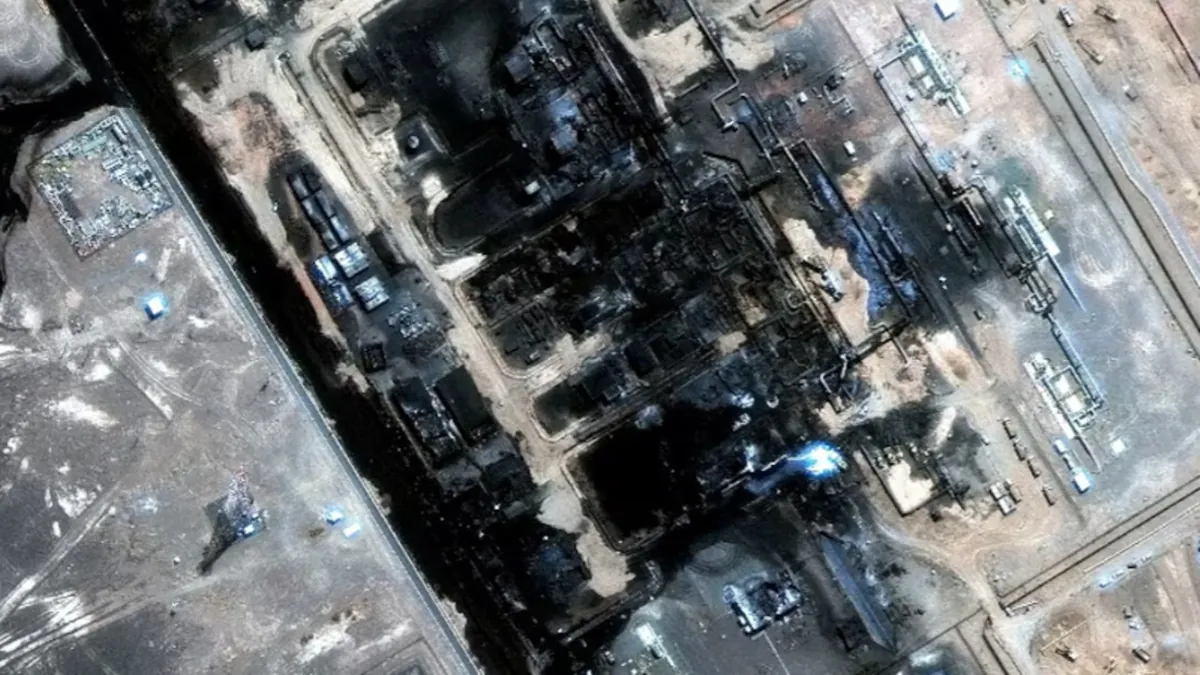
Pipeline attack triggers sharp rise in oil prices.
An east-west crude oil pipeline crossing the Arabian Peninsula was urgently shut down after being attacked by drones. This pipeline is designed to transport 4 million barrels of oil per day, corresponding to 4% of the global crude oil supply. If it is shut down for a long time, there will be a direct gap in global crude oil circulation. The core function of this pipeline is to directly deliver crude oil to the Yanbu Port on the Red Sea. Over the past six months, it has helped Saudi Arabia bypass the Strait of Hormuz and reduce the export risks caused by the blockage of the strait. The current inventory at the Yanbu Port is only enough to sustain 5 to 7 days of export shipments.
The most uncertain aspect in the market is the duration of pipeline repairs. Some people estimate that the repair will take five to six weeks, while others believe that the repair progress will be faster and that partial resumption of transportation can be achieved during this period. The Saudi authorities have not disclosed the details of the pipeline damage to the outside world nor given a clear timetable for resuming production. This information gap has amplified the volatility of crude oil futures.
Port inventories serve as a short-term buffer, while the Middle East shipping lanes face multiple risks.
The storage tanks in the hands of Saudi Arabia are the only buffer to stabilize the futures market temporarily. The combined storage capacity of Ain Sukhna and Sidi Kerir is nearly 38 million barrels. At present, these storage tanks have not been exhausted. As long as the pipelines can be repaired before the inventory runs out, exports will not directly cease. Traders and crude oil buyers are closely monitoring the rate of inventory consumption. If the pipeline repair is delayed and port inventories continue to be consumed, the spot market will tighten.
This pipeline accident is not an isolated incident. The situation in the Red Sea region is tense, and the Houthi militants recently controlled the islands at the entrance of the Red Sea. Coupled with the large reduction in the traffic volume of the Strait of Hormuz, multiple routes for the export of Middle East crude oil have been restricted. Before the war, the daily export volume of Middle East crude oil was about 22 million barrels. Now, the traffic volume of crude oil through the Strait of Hormuz has dropped to between 6 million and 9 million barrels per day. Saudi crude oil production has decreased from 10.9 million barrels per day in February to 6.2 million barrels per day in August.
Data shows that Saudi crude oil exports in August have dropped to a 30-year low. Institutions predict that global crude oil supply will decrease by 5.7 million barrels per day daily this year, with a decline of nearly 6%. If the pipeline cannot be restarted for a long time, the market will further raise the pricing of forward oil prices. The increase in oil prices caused by the geopolitical conflict in the Middle East will also spread outward. Crude oil futures are no longer just a commodity trading target, they have also become a barometer of global inflation and interest rate expectations.
The crude oil trading faces two scenarios for analysis.
In the current crude oil futures market, the differences between the bulls and the bears mainly lie in two scenarios. The bulls assume that the pipeline maintenance period will be longer, and after the depletion of port inventories, the global crude oil supply gap will materialize, and the oil price will continue to rise. The bears believe that Saudi Arabia still has spare port inventories, and the maintenance progress may be faster than market expectations, so the supply gap will not fully materialize, and the short-term rise is driven by sentiment.
For industrial customers such as refineries and chemical enterprises, the uncertainty has increased the difficulty of hedging operations. Before the pipeline accident news was released, many enterprises purchased Middle East crude oil according to their original plans. After the incident, buyers accelerated the locking of spot and futures positions, and prepared in advance to prevent the interruption of subsequent deliveries.