Gold prices have dropped, while oil prices and geopolitical factors are creating a tug-of-war between bulls and bears
Exceeding expectations in inflation data, coupled with a huge increase in crude oil prices, has led the market to expect an interest rate hike by the Federal Reserve. Gold futures have come under pressure and have hit a stage low.
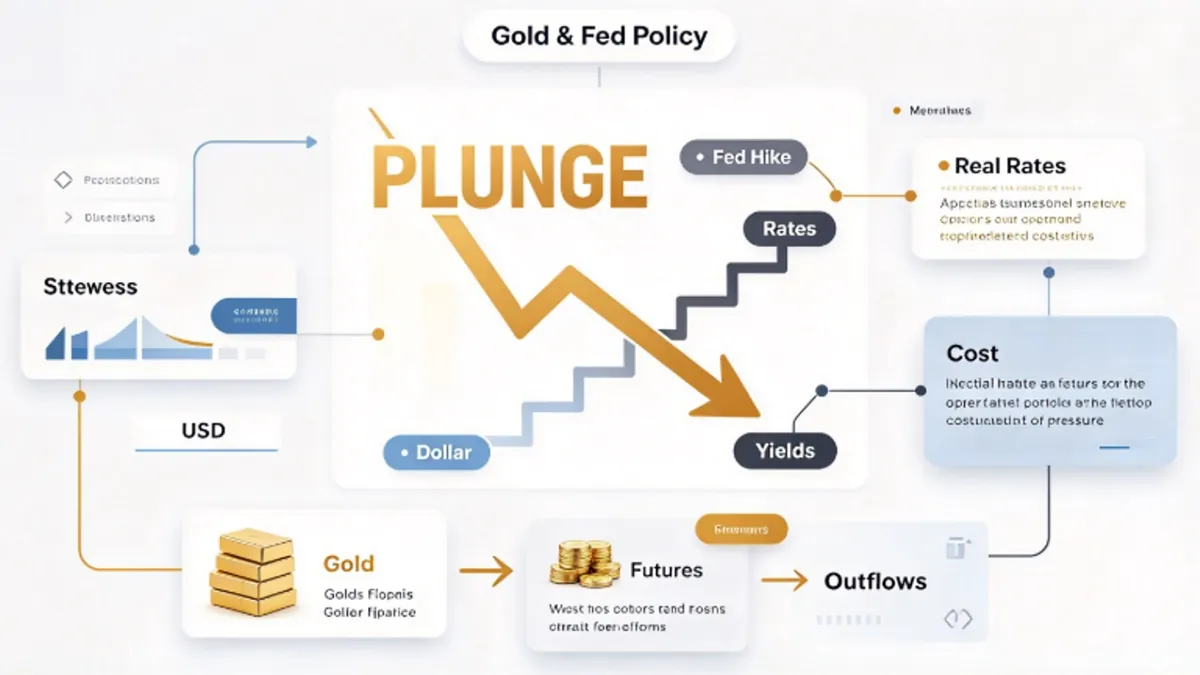
Gold faces concentrated selling pressure.
Gold futures weakened at the beginning of this week and touched its lowest level in over a month during the trading session. The US inflation data, the risk of crude oil supply in the Middle East, jointly pushed up market expectations for the Fed to tighten its policy. Funds began to withdraw from the long positions in gold. The CPI data released by the Bureau of Labor Statistics exceeded market expectations. The CPI last month rose by 0.4% compared with the previous month, which only increased by 0.1%. This data directly changed the market's judgment on the Fed's policy.
CME tools show that traders estimated the probability of an interest rate hike on Wednesday to reach 93%. The rapid change in expectations was directly reflected on the COMEX gold futures market. US gold futures dropped by 1.3% and were quoted at $4,351.90 per ounce. Spot gold also fell, reaching its lowest level since August 7th. The sharp rise in oil prices raised inflation expectations. The market will predict that central banks must tighten monetary policy to curb prices, and the interest rate hike expectation is a bearish logic for gold futures.
The strengthening of the US dollar has intensified the pressure on gold.
The US dollar has risen and reached a two-week high. As gold is priced in US dollars, non-US currency investors need to pay higher costs when buying gold futures, which has suppressed overseas buying. The combination of the strengthening of the US dollar and the expectation of interest rate hikes has placed double pressure on the precious metals sector. Other precious metals also fell, with spot silver dropping by 1.2% to $63.71. Platinum fell by 1.6% and palladium slightly declined by 0.7%.
The declines vary for different types, but overall they are all moving in the same direction. Silver has a stronger industrial attribute and is affected by expectations of interest rate hikes and industrial demand expectations. Platinum, palladium and the automotive industry chain have a higher correlation. The impact of rising oil prices on downstream manufacturing will also be reflected in their futures quotations.
In gold trading, the real interest rate is the core pricing factor. Gold does not generate interest. When the market expects interest rates to rise, bonds can obtain higher returns, and funds will shift from gold to bond assets. Even if inflation is rising, as long as the rate of nominal interest rate increase exceeds inflation, the real interest rate rises, and the price of gold is more likely to fall.
Expectation of synchronized tightening of monetary policies by multiple central banks.
Not only the Federal Reserve, but the market is also pricing in the interest rate hike actions of the Bank of Japan. The Bank of Japan is expected to start raising interest rates on Friday. The continuous rise in energy prices, the lack of signs of easing in the conflict in the Middle East, and the increasing inflationary pressure in Japan itself are supporting this expectation for an interest rate hike. The entry of multiple central banks into the tightening cycle will push up the global real interest rate center. This macro environment is difficult to provide upward momentum for gold futures.
Gold traders need to track the decisions of multiple central banks simultaneously and can not just focus on the Federal Reserve. The relative changes in interest rate expectations of various countries will bring price difference opportunities for gold denominated in different currencies and also give rise to cross-market arbitrage ideas. Most economists surveyed predict that the Federal Reserve will implement an interest rate hike on Wednesday and there will be at least one more hike before the end of March. The market has already priced in the continuous tightening path.
Divergence between bulls and bears in the gold futures market.
In the gold futures market, the logic of the bulls and the bears is completely different. The core argument of the bears is: The CPI data is strengthening, crude oil is pushing up inflation, the Federal Reserve is firmly committed to raising interest rates, the real interest rate is rising, and the valuation of gold as an interest-free asset continues to be revised downward. As long as the Federal Reserve makes a hawkish statement, there is still further downward space for gold futures.
The bulls' logic is that the conflict in the Middle East continues to escalate, and the risk of crude oil supply will not disappear quickly. Once subsequent economic data weakens, it is unlikely that the Federal Reserve can continue to aggressively raise interest rates. If this interest rate hike releases a dovish signal, indicating a pause in tightening in the future, gold futures will quickly recover.
Futures traders are mainly waiting for the Federal Reserve's decision and its post-meeting statements. A simple interest rate hike is an expectation that the market has already priced in, and it is unlikely to bring additional shocks. What truly affects the market is the description of the Federal Reserve's subsequent interest rate hike path. If it expresses a tough stance and implies continuous interest rate hikes, gold futures will continue to be under pressure; if it expresses caution and retains a wait-and-see attitude, the previous short positions will choose to close out, and gold will experience a rebound.