The strengthening of the US dollar and expectations of Fed interest rate hikes
The conflict in the Middle East has pushed up oil prices, and combined with expectations of Fed interest rate hikes, funds have flocked to the US dollar for hedging.
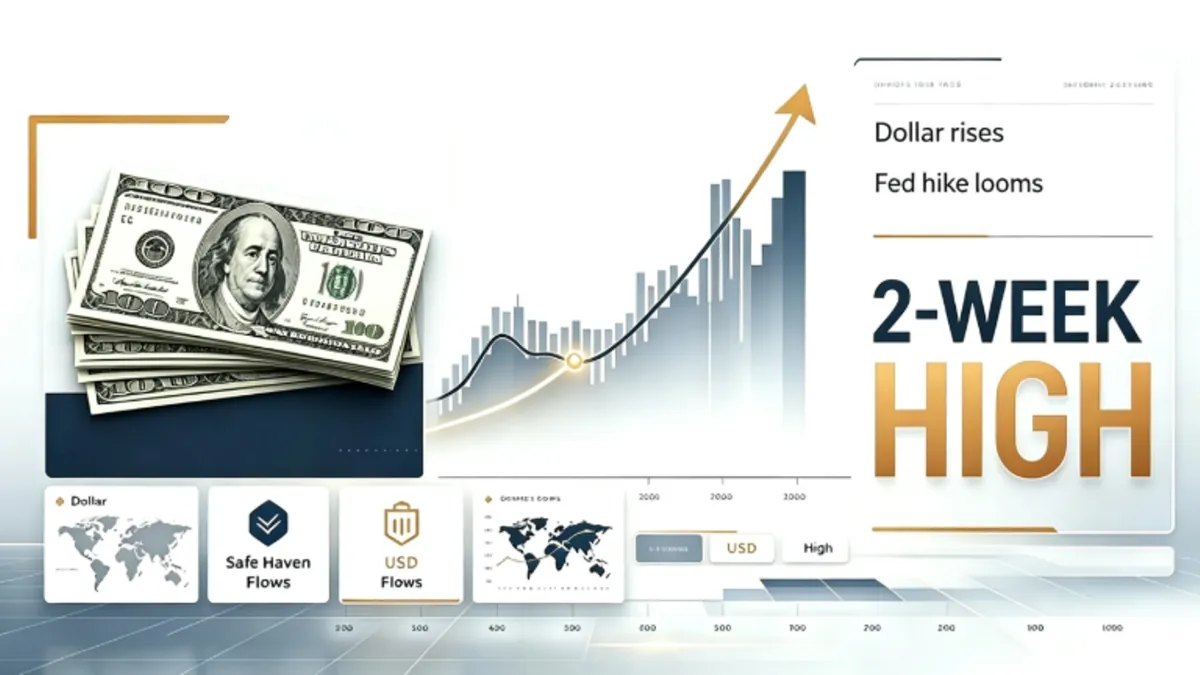
The US dollar index futures have reached a new high for the period.
On Monday, the global foreign exchange market was clearly biased towards risk aversion. The tense situation in the Middle East, the rapid rise in crude oil prices, coupled with market expectations that the Federal Reserve will initiate its first interest rate hike in more than two years, led a large amount of funds to shift to US dollar assets, driving the US dollar index futures to strengthen. The executives of leading AI enterprises collectively warned of potential risks in AI, and market risk appetite declined, further supporting the rise of the US dollar.
The US dollar index reached its highest point of the day at 99.735 and closed up 0.3% at 99.41. Non-dollar currencies were generally under pressure. The euro futures against the US dollar dropped to a one-month low of 1.153, falling by 0.2% during the day. The pound against the US dollar also declined, trading at 1.3512, a 0.2% decrease.
In the foreign exchange futures market, short positions increased on euro and pound contracts. The uncertainty in the Gulf region has not been eliminated, and the negative news related to AI has depressed the stock market. Under such circumstances, funds tend to hold the US dollar, and the US dollar index will continue to receive support.
The change in inflation expectations alters the pricing of the Fed's interest rate hikes.
The inflation risk brought about by the rise in crude oil prices has driven the US dollar to strengthen. The Houthi militants attacked Saudi Arabia, and Saudi Arabia shut down a main oil pipeline leading to the Red Sea. The risk of Red Sea shipping has increased, coupled with the stalemate in the US-Iran conflict, the scheduled meetings among Gulf countries have been postponed, and there have been more maritime attacks. The market is worried about the contraction in crude oil supply. Energy prices rise directly affecting the inflation data, and the price of diesel has reached an all-time high.
The yen has reversed from a bearish to a bullish trend.
The US dollar rose by 0.5% against the yen, trading at 154.355. Last week, this contract even dropped to around 153, which was the lowest level in nearly seven months. Previously, the market was betting on an interest rate hike by the Bank of Japan, causing the yen to strengthen. Now, some long positions have begun to close out their positions. The market is almost unanimously expecting the Bank of Japan to implement an interest rate hike on Friday. This expectation earlier led to a large number of yen long positions, with speculative positions establishing a net long position for the first time in yen futures since February.
As the expectation of interest rate hikes in the US dollar side intensifies, the expected interest rate differential between the US and Japan has changed. Some funds choose to realize the gains from yen long positions and push the US dollar against the yen to rise. On one hand, the Federal Reserve is considering an interest rate hike, while on the other hand, the Bank of Japan is slowly withdrawing from its easing policy. The policy rhythms of the two sides are different, and the expected interest rate differential fluctuates back and forth.
The euro and the pound are under pressure.
The European Central Bank completed its interest rate hike last week. Market expectations for the Bank of England are mixed. Traders expect the Bank of England to keep interest rates unchanged this Thursday, but they believe there is a possibility of interest rate hikes later this year and in 2027. Although the European Central Bank has raised interest rates, the market is concerned about the economic capacity, and there is limited room for further interest rate hikes. Compared with the Federal Reserve, the expected interest rate differential between the US and Europe continues to tilt towards the US dollar. The long-term bulls of euro futures are reluctant to enter the market in a large scale.
The euro futures against the US dollar are also under pressure. The expectation of the Bank of England to temporarily suspend interest rate hikes in the short term leaves the pound lacking policy support. Even if there is an expectation of interest rate hikes in the future, it is difficult to reverse the weak market trend in the short term. The fluctuations in global risk appetite also continue to affect the euro and the pound. The spread of risk-related remarks in the AI industry has put pressure on the stock market, and funds prefer to hold US dollars in cash. This kind of safe-haven trading will put pressure on currencies with stronger risk attributes such as the euro and the pound.